 Farah Sabir
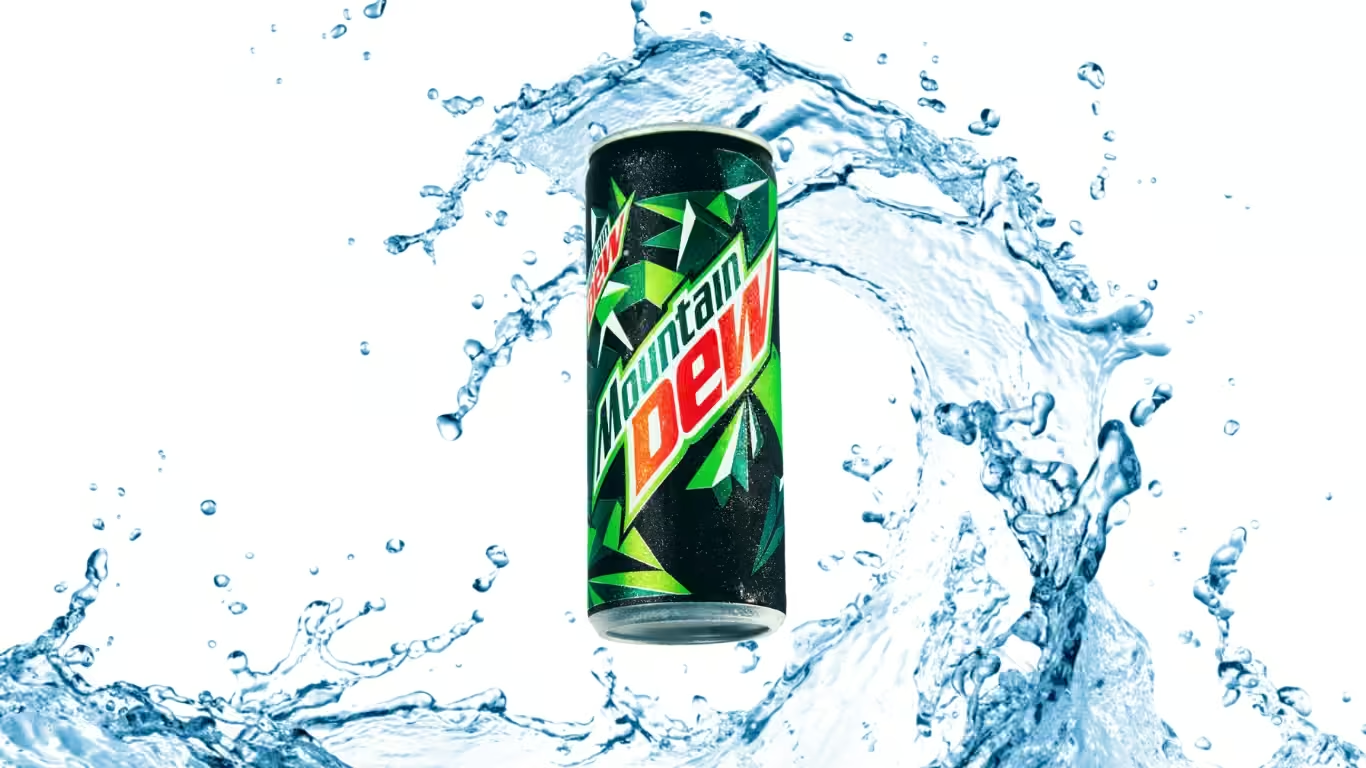
 If there’s one soft drink that’s managed to carve out a niche following and a legendary reputation, it’s Mountain Dew.
Famous for its neon-green glow and extreme-culture branding, it’s one of the most recognizable sodas worldwide.
But if we can look past its refreshing fizz and bold marketing, its cocktail of ingredients has led many health-conscious individuals, parents, and food safety advocates to question its impact.
Why is Mountain Dew often called one of the most problematic sodas? The answer is in its ingredient list, which outlines how these components can negatively affect health.
Let’s take a closer look at what’s inside a Mountain Dew can, its ingredients’ potential toxicity, and their effects.
The Ingredient List Breakdown
Let’s look at Mountain Dew’s contents and what it offers—literally and figuratively.
1. Carbonated Water
The first ingredient is simply water infused with carbon dioxide to create that satisfying fizz.
While carbonation is harmless, it’s worth noting that these bubbles can contribute to dental erosion by increasing the drink’s acidity.
2. High Fructose Corn Syrup (HFCS)
High fructose corn syrup is the main sweetener, giving Mountain Dew its saccharine flavor.
Here’s why this ingredient is concerning:
- Empty Calories: HFCS is a source of calories without any nutritional benefits, contributing to weight gain and obesity.
- Diabetes Risk: Studies link HFCS consumption to increased risks of insulin resistance and type 2 diabetes.
- Excessive Sugar: A single 12-ounce can of Mountain Dew contains 12 teaspoons of sugar, exceeding the American Heart Association’s recommended daily sugar intake of 6 teaspoons for women and 9 teaspoons for men (“How Much Sugar Is Too Much?,” 2019).
For a detailed look into HFCS, please check out this post: https://grosseating.com/the-unhealthy-reality-of-high-fructose-corn-syrup-in-soda/
3. Concentrated Orange Juice
This adds a citrusy base, and it may sound like a wholesome addition, but it’s stripped of its fiber and offers little nutritional value in this context. When we combine it with HFCS, it just boosts the drink’s sugar content.
4. Citric Acid
Citric acid serves as a preservative and provides Mountain Dew’s tangy flavor. However, it’s highly acidic and contributes to dental erosion by weakening tooth enamel, making teeth more prone to decay.
This ingredient plays a significant role in what's known as "Mountain Dew Mouth," severe tooth enamel erosion tied to excessive soda consumption.
5. Natural Flavors
While the term “natural flavors” might sound comforting, it’s always a vague catch-all representing a combination of compounds derived from natural sources.
This ingredient’s lack of transparency leaves us all guessing about its contents.
6. Sodium Benzoate (Preservative)
Sodium benzoate is added to prolong the shelf life of Mountain Dew.
However:
- When combined with ascorbic acid (vitamin C), it can form benzene, a carcinogenic compound linked to an increased risk of cancer (Myers, 2024).
- It has also been flagged for causing allergic reactions or hyperactivity in sensitive individuals.
7. Caffeine
Caffeine is the ingredient that gives Mountain Dew its energy-boosting properties.
Although caffeine is safe in moderate amounts, excessive intake can lead to:
- Increased heart rate and blood pressure
- Dependency or addiction
- Disrupted sleep cycles
A single can of Mountain Dew contains around 54 mg of caffeine—a higher amount than most sodas, making it particularly concerning for children and adolescents.
8. Sodium Citrate
This is used to enhance flavor and balance acidity.
While generally safe in moderation, consuming large amounts of products with high sodium content over time can contribute to kidney strain or high blood pressure.
9. Gum Arabic
Gum Arabic is a stabilizing agent that ensures the drink maintains a consistent texture. Although considered safe, its inclusion mainly underscores how far removed sodas are from natural beverages.
10. Erythorbic Acid (Preservative)
Erythorbic acid, a vitamin C derivative used to preserve freshness, is not inherently harmful.
However, its purpose here is not to increase nutritional value but to extend the product’s shelf life.
11. Calcium Disodium EDTA
This ingredient protects flavor by binding to trace metals, but it isn’t without its controversies:
- It’s suspected to cause gastrointestinal issues like cramps or nausea in some.
- Excessive consumption has been linked to kidney damage over time.
12. Yellow 5 (Tartrazine)
This is one of the most controversial ingredients in Mountain Dew. Yellow 5 gives the soda its signature neon-green hue but also raises significant concerns:
- Allergic Reactions: Yellow 5 has been linked to hypersensitivity reactions in some individuals, especially those prone to asthmatic or skin conditions.
- Hyperactivity: Research has associated Yellow 5 with increased hyperactivity in children, raising scrutiny for its use in food products widely consumed by kids.
- Health Risks: Some studies suggest potential connections between artificial dyes and hormone disruption or reduced zinc levels, an essential mineral for immune function and enzyme production.
What Makes Mountain Dew Potentially Toxic?
While no single can of Mountain Dew is outright “toxic,” the cumulative effects of its ingredients, especially with frequent consumption, can pose significant risks.
Here is how:
Dental Health Risks: “Mountain Dew Mouth”
Combining high sugar content, citric acid, and carbonation leads to tooth decay and enamel erosion.
This is the primary cause of the infamous “Mountain Dew Mouth” phenomenon, particularly in areas lacking dental hygiene care (Clinic, 2022).
One alarming phenomenon highlighting Mountain Dew’s potential dangers is the practice of serving it in baby bottles, particularly in some rural areas of the United States.
Referred to as “Mountain Dew mouth,” this habit has been linked to severe dental decay in toddlers and young children.
The beverage’s high sugar content and acidity erode enamel, leading to cavities, gum disease, and extensive tooth damage.
Metabolic and Weight Issues
High fructose corn syrup paired with the other sweeteners contributes to obesity and metabolic syndrome.
This caloric overload is worse for those leading sedentary lifestyles (CDC, 2025).
Potential Carcinogens
The presence of sodium benzoate, caffeine, and artificial dyes like Yellow 5 includes compounds that, when consumed in large quantities or combined with other dietary factors, could increase cancer risk (Kobylewski & Jacobson, 2012).
Hormonal and Neurological Concerns
Yellow 5 and similar synthetic dyes are suspected of disrupting hormone levels. Prolonged caffeine intake can also potentially aggravate anxiety, especially in younger consumers (Klevebrant & Frick, 2022).
Dependency
The caffeine content in Mountain Dew makes it highly addictive, leading to cravings and dependency, particularly in habitual drinkers.
Is It Time to Rethink What We Drink?
If you or your family consume Mountain Dew regularly, consider the following suggestions to minimize its harmful impact:
- Moderation is key—limit consumption to an occasional treat rather than a daily habit.
- Rinse with water after drinking to reduce acid exposure on your teeth.
- Seek Alternatives like infused water, herbal teas, or sparkling water for a more healthful refreshment.
Sodas like Mountain Dew are tasty and fun to drink, but have high risks.
The list of ingredients shows why it’s smart to be careful with these drinks.
Switching to better drink options could be one of the simplest ways to stay healthy for ourselves and our families.